We launched our annual M&A report – ‘Dynamic businesses at the forefront of M&A optimism’ – in Hong Kong last week. The report has provoked a good deal of debate and I just wanted to share two highlights from the data.

Denmark has made some fantastic television dramas over the past few years. ‘The Killing’ and ‘Borgen’ have been compulsive viewing in the Lagerberg household. Both place intelligent, strident women as the main characters and, in the case of political drama, Borgen, imitate life itself by prophetically telling the tale of a female Prime Minister – Helle Thorning-Schmidt becoming the first Prime Minister of Denmark in 2011.
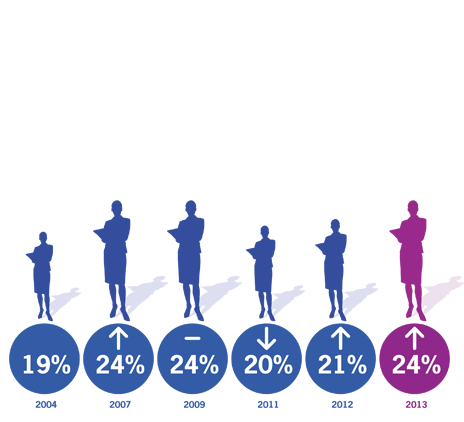
Just one in seven delegates at the annual World Economic Forum gathering was a woman this year. This statistic alone explains why the issue of women in businesses inspires so much passion and debate, emphasising that the path from the classroom to the boardroom is anything but straightforward.
I am currently at MIPIM, the annual gathering of property professionals from around the world, and can report that the mood is much improved from this time last year. Developers, property companies, investors and homeowners suffered disproportionately during the financial crisis.
The financial crisis was devastating for the hotel industry as consumers and businesses pulled back on discretionary spending. However, the report we released this week ‘Hotel Investment 2014 – Finance on a different level‘ reveals that the impact of the crisis was not all bad – certainly in terms of placing the hotel financing environment on a more balanced and sustainable footing.
Wherever I go in the world, I’d rather be walking a dog than stroking a cat. Some things are the same wherever you are. But does this include business leaders? Working with senior business people across the globe, I’ve found they do share a lot of traits – valuing integrity, a positive attitude and the ability to communicate – even across wide cultural divides.
I read a fascinating article in the Wall Street Journal the other day which suggested that my region could broadly be thought of as two separate entities.
The technology industry is synonymous with innovation, fuelled by investments and a continual focus on research and development (R&D). By its very nature it is at the forefront of change. Those businesses which fail to keep up with technological change and stay current with consumer requirements are left behind.
We asked the 3,500 business leaders who responded to our latest Grant Thornton International Business Report (IBR) a new question in Q4-2013: Do you expect rising energy costs to constrain the growth of business over the next 12 months?
The lure of China’s less well-known cities and the opportunities they present has been picking up speed for years, along with their impressive growth. In fact, while they are often described as ‘second-tier’ cities, many are in fact now wealthier than their ‘first-tier’ counterparts.
Sweden is an open, trade-oriented economy with a strong emphasis on supporting enterprise. It is therefore perhaps unsurprising, if still pleasing, to find the economy ranked third for the dynamism of our business operating environment in the Grant Thornton Global Dynamism Index (GDI) 2013. We are behind only Ireland and Canada on this measure in the 60-economy study.
I was interviewed this week by CNBC and BBC World News to discuss the economic outlook for 2014, drawing on the views of 3,500 senior executives in 45 economies we interview for our International Business Report (IBR).
Israel is a major player in science & technological innovation. In fact, perhaps only the United States is more prominent globally.
The Philippine economy is growing fast. GDP expanded by 6.8% in 2012 and, whilst remittances climbed to a record high of US$23.8 billion in 2012, their share of GDP actually dropped to 8.5%, down from 9% in 2011.
Business optimism in markets such as China, the UK and the US has risen markedly over recent months according to the Grant Thornton International Business Report (IBR)[1]. And the most interesting aspect for me is the contribution of the real estate and construction sector to the brightening economic outlook.
The outlook for the cleantech sector looks to be improving. While the Climate Policy Initiative reported that global climate finance flows had plateaued at US$359bn in 2012, business growth indicators from our Q3 International Business Report (IBR) are positive, particularly as regards investment and R&D, although a shortage of talent remains a challenge