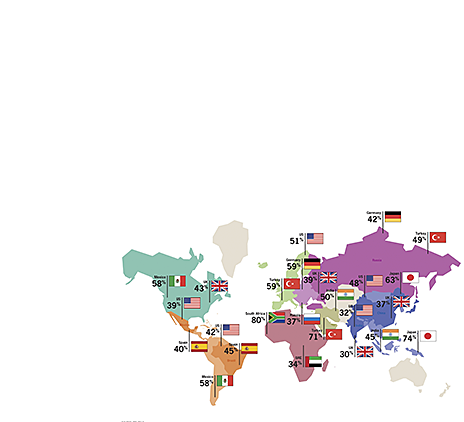
Last week, we released the results of the Grant Thornton Global Dynamism Index (GDI) 2013. This is the second year we have released these results. We are seeing the beginning of trends in the data but there was also some interesting movement up and down the rankings.

Reviewing the Q2 International Business Report (IBR[1]) results, I was pleased to see some good news for construction & real estate companies: Profitability expectations around the world are up. However, my optimism is tempered somewhat by recent news from China and it will be interesting to see how businesses react in Q3.
The brightening outlook for Spain. Rising exports amongst reasons to be optimistic
This time last week I was interviewed by Bloomberg and CNBC to discuss a divergence in business optimism between China and the US revealed by our Q2 International Business Report (IBR). The results were surprising: Chinese business optimism is at an all-time low whilst their US peers are more optimistic than at any time since 2005.
Last week, the International Labour Organisation (ILO) released their annual World of Work report. It contains some stark warnings, particularly for mature economies where it does not expect employment levels to return to pre-crisis levels before 2017. Getting people back into work, the report says, will be a “major global challenge” for years to come and the threat of “social unrest” a major risk.
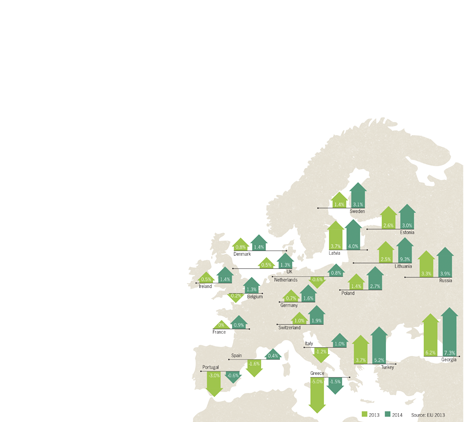
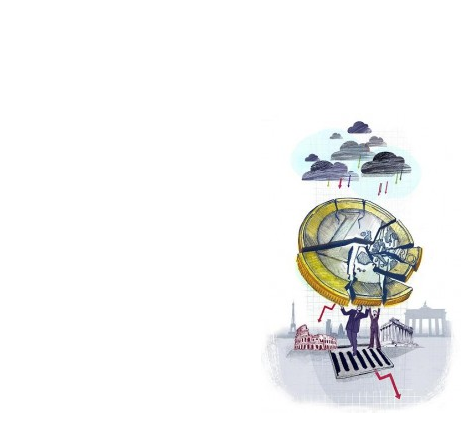
Writing our recently released Future of Europe report, the thing that stood out to me most was the divergence of business opinion on how to handle the eurozone crisis. And not just between the 17 euro ‘ins’ and the 10 euro ‘outs’ – which you might expect – but a split right at the heart of Europe.
Having been Managing Partner of Grant Thornton Ireland for 9 years, I was naturally drawn to the mixed views of Irish businesses in our 2013 Future of Europe report which we released this week. The report revealed much support for what the euro has achieved, but very little appetite for further integration.
The Q1 IBR economic update contained a major surprise: For the first time, not one of the BRIC economies made it into the top five for business optimism.
The latest update from our International Business Report (IBR) provided some encouraging signs for the health of the global economy. On the back of easing demand conditions, both investment plans and business confidence are up.
The outlook has improved somewhat since the ANC’s Manguang conference at the end of last year. It is encouraging for business leaders to see the adoption of the national development plan, with various measures to tackle unemployment, poverty and inequality.
On 18 January, the National Bureau of Statistics in China revealed that the economy’s working-age population shrank by 3.45m in 2012.
The United Kingdom Prime Minister, David Cameron, today set out a path by which the country could leave the European Union by 2017.
The big New Year business story was that politicians in the United States had pulled the economy back from the brink of the ‘fiscal cliff’, albeit slightly later than planned.
On the one hand, the results from our once-every-two-years look at the world’s leading emerging markets were encouraging. Business leaders across the world are looking at international expansion opportunities.
Your questions answered by Nigel Davies, your questions answered by Nigel Davis