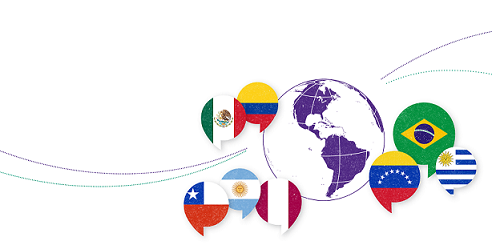
Jose Luis Sarrio (international business centre director and partner at Grant Thornton Peru) and Madeleine Blankenstein (international business centre director and partner at Grant Thornton Brazil) discuss the outlook for Latin America.

Francesca Lagerberg, Global head of Tax services welcomes moves towards global taxation transparency.
The second quarter of 2014 brought a raft of very cheery economic news. The pace of growth in China kicked back up to 7.5% following a mini-stimulus from the government which included speeding up infrastructure project approvals, tax relief and credit easing. The United States roared back after a particularly bitter winter to post 4.0% growth (at the annual rate). Spain was buoyed by news that growth had accelerated to 0.6% (from the previous quarter) and the unemployment rate has started to fall.
Sustainability is a buzzword of the moment. Whether as business leaders or consumers, we cannot escape from being told to consider the long-term implications of our actions or spending decisions.
Ed Nusbaum talks to Ivo Daalder about the outlook for emerging markets
We launched our annual M&A report – ‘Dynamic businesses at the forefront of M&A optimism’ – in Hong Kong last week. The report has provoked a good deal of debate and I just wanted to share two highlights from the data.
I am currently at MIPIM, the annual gathering of property professionals from around the world, and can report that the mood is much improved from this time last year. Developers, property companies, investors and homeowners suffered disproportionately during the financial crisis.
I read a fascinating article in the Wall Street Journal the other day which suggested that my region could broadly be thought of as two separate entities.
The lure of China’s less well-known cities and the opportunities they present has been picking up speed for years, along with their impressive growth. In fact, while they are often described as ‘second-tier’ cities, many are in fact now wealthier than their ‘first-tier’ counterparts.
Sweden is an open, trade-oriented economy with a strong emphasis on supporting enterprise. It is therefore perhaps unsurprising, if still pleasing, to find the economy ranked third for the dynamism of our business operating environment in the Grant Thornton Global Dynamism Index (GDI) 2013. We are behind only Ireland and Canada on this measure in the 60-economy study.
Israel is a major player in science & technological innovation. In fact, perhaps only the United States is more prominent globally.
The Philippine economy is growing fast. GDP expanded by 6.8% in 2012 and, whilst remittances climbed to a record high of US$23.8 billion in 2012, their share of GDP actually dropped to 8.5%, down from 9% in 2011.
The Chinese economy is slowing. The days of rampant, double-digit expansion are in the past as we move away from massive investment and export dependency towards a more sustainable, consumption-driven model of growth. This rebalancing offers both challenges and opportunities for dynamic organisations. How these businesses adapt to the changing environment will be key to their growth prospects.
There was some great news for Chile in the latest edition of the Grant Thornton Global Dynamism Index (GDI): we ranked second out of 60 economies, behind only Australia.
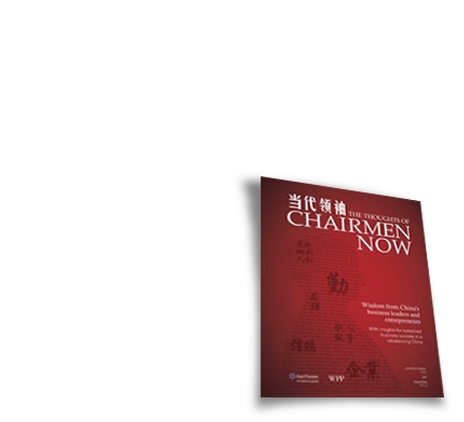
John Geldart has spent a lot of time in China over recent years. It is an amazing country which fascinates and surprises him every time he returns, but perhaps no more so than over the past few months when he has been lucky enough to interview the chairmen of some of its most dynamic companies.
According to our Global Dynamism Index (GDI) 2013, Australia is the economy businesses should be looking at. It climbed to the top of the ranking of 60 of the largest economies in the world this year, up from seventh place in 2012.